
According to the New York Fed, total household debt is up to $17.291 trillion, a $726 billion jump from Q3 2022. $471B of that increase is from new mortgage loans (hooray!). An alarming $154B is new credit card debt, which surprisingly more than doubles the $71B in new auto loans. Though new student loans are only up $25B from a year ago, the category still holds the second highest outstanding balance classification at $1.599 trillion.
As far as repayment performance goes, the mortgage default rate stands at 0.72%. Student Loans are 0.77%, Car Loans are at 2.53%, and Credit Card payments have a 5.78% of outstanding payments being more than 90 days past due. Aside from more student loan payments being made on time in 2023 than in 2022, the delinquency rate of all other categories has risen over the last 12 months.
The likelihood of capital being returned is the underlying determinant of the interest rate being offered. Consequently, higher default rates increase upward pressure on yields. The fact that mortgages are performing historically well does bode well for us now.
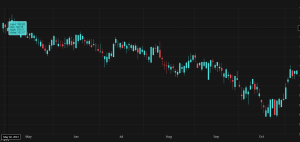
After the large runup in price last week, which dropped interest rates, as you can see in the chart below, MBS pricing has been holding steady for the last few days.